- 16 Posts
- 36 Comments


 5·1 year ago
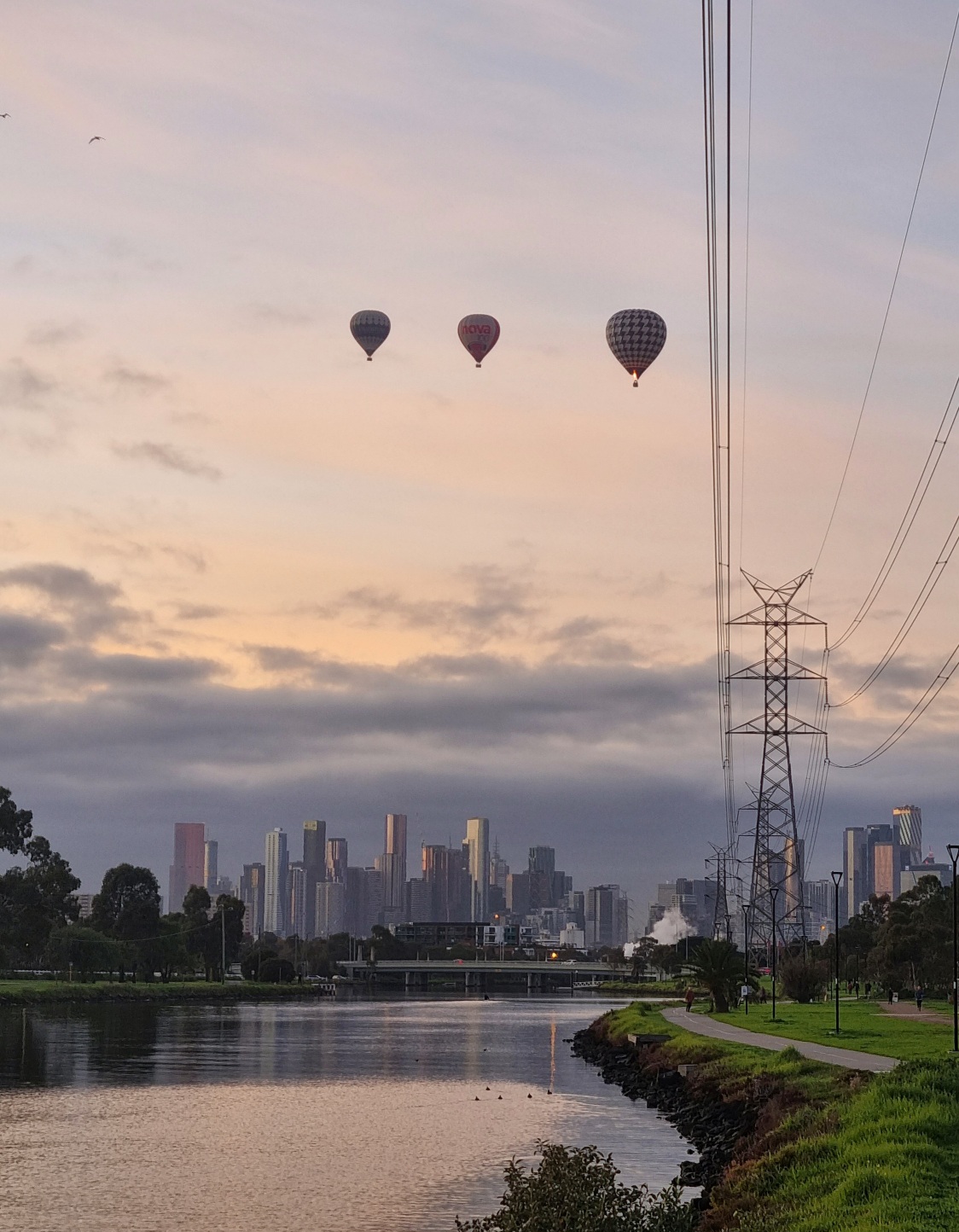
Damn, gives a good perspective to the size of that Wedgie!
 6·2 years ago
Did a quick google search of his name, turns out his time at News Corp was limited, and it didn’t end on good terms
Early on Friday morning, News Corp Australia announced that Williams had resigned, just 20 months into the job. In a letter to staff, Williams thanked his colleagues, while admitting that “the issues encountered have at times been frankly really confronting”. Confronting, indeed. In his short and tumultuous tenure, Williams had managed to not only alienate some of the company’s most senior editors, most notably Chris Mitchell, editor of The Australian, and Paul Whittaker, editor of The Daily Telegraph, but infuriate Lachlan Murdoch, the man who had originally got him the job. “News Corp might be a publicly-listed company run out of Delaware, but there’s never any mistake that you are working for Rupert,” former Sunday Telegraph editor Neil Breen says. “It’s a family company. You run it the Murdochs’ way or you don’t run it at all.”
The source of the above quoute: https://www.smh.com.au/business/companies/making-the-wrong-enemies-how-williams-was-cut-down-at-news-20130809-2rnsx.html Which was a Wikipedia citation: https://en.m.wikipedia.org/wiki/Kim_Williams_(media_executive)
If he managed to anger them so much while he was employed by them, hopefully he can anger them even more de-shitifying the ABC.
 1·2 years ago
I’ve been considering calling the platform FascX. Not sure how well it works though.
I find it highly hypocritical that while the LNP were fear mongering against China they enabled them to become the global leaders in PV manufacturing which turned into a $50 billion annual return (I think that’s the amount/rate the article cited) for them, which instead could have been flowing back into Aus.
It’s also would have created thousands of jobs, you know, the thing the coalition were constantly proclaiming they were always working to create. Unless they meant creating jobs by casualising the work force so everyone could work fewer hours for each employer but he the “opportunity” to have multiple, lower hour jobs.


Might be a water dragon, I’m not certain though


 5·2 years ago
Considering
Only 1% of Australian taxpayers own nearly a quarter of all property investments across the country, amid concerns over escalating rates of wealth concentration.
Data provided by the Australian Taxation Office has revealed the extent of that concentration, with more than 7% of property investors – or 215,321 people – accounting for 25% of all property investments.
That 7% also have three or more interests in investment properties across the country, with 1% of investors – or just 19,895 people – currently holding six or more investment interests.
And that is only the top 1% of tax payers (which is only 7% of investors), I can’t imagine what percentage of property investment is owned by the top 10% of tax payers.
No doubt, but steel production produces a lot of pollution as well. It will be interesting to see the progression of green steel manufacturing tech and battery tech vs one another over time, even hydrogen tech. Its a tough choice because at any point we could see a major breakthrough in one of them making all the others relatively less cost and environmentally sound options.
So I’ve been reading up on this topic a bit more and I came across this
Problem Australia’s interstate freight rail network comprises many long sections of single track. This restricts the number of train paths, reducing rail’s competitiveness with road, and hindering rail’s ability to meet growing freight movement demand. The interstate freight rail network needs to be enhanced to accommodate growth in the freight and passenger task, and improve efficiency and safety.
On the bright side it is a proposal to upgrade a lot of the rail corridors to support more freight than we have currently. Though it was added in 2016 and is still only in the ‘potential investment options’ phase
Yeah true I didn’t even think about batteries or hydrogen as diesel replacements for trains. The up to 6MWh of storage your article quotes for the short distance hauls sounds like a lot of storage, but I guess there is a considerable amount of surface area at the bottom of a locomotive that could be filled with batteries, and if each locomotive can’t hold enough storage to pull the load, you can just add another locomotive to the train to make up the difference.
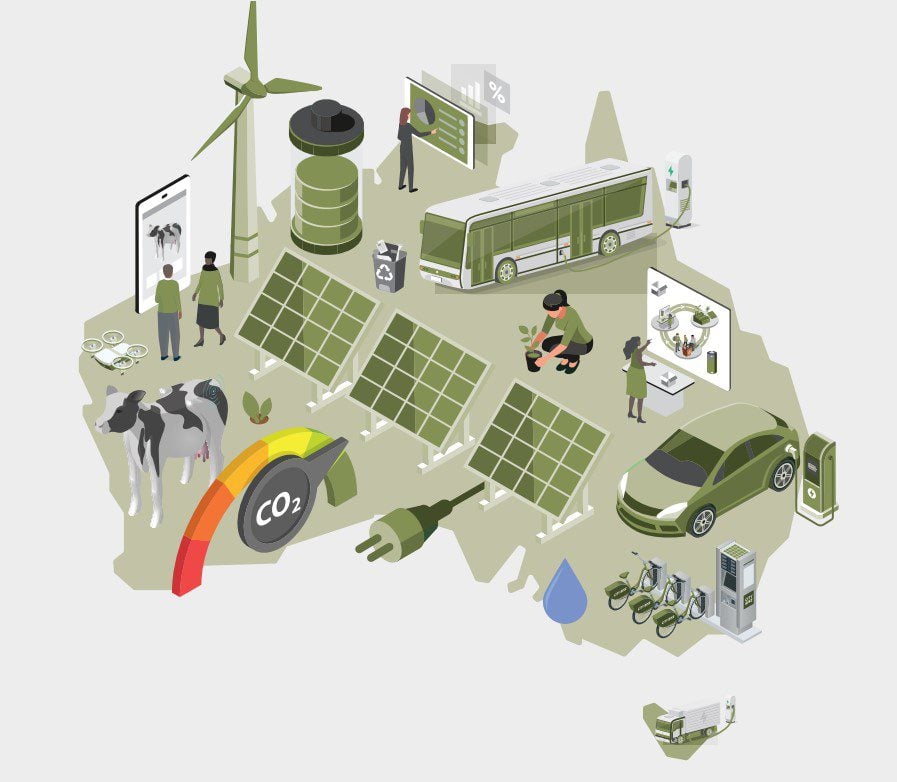
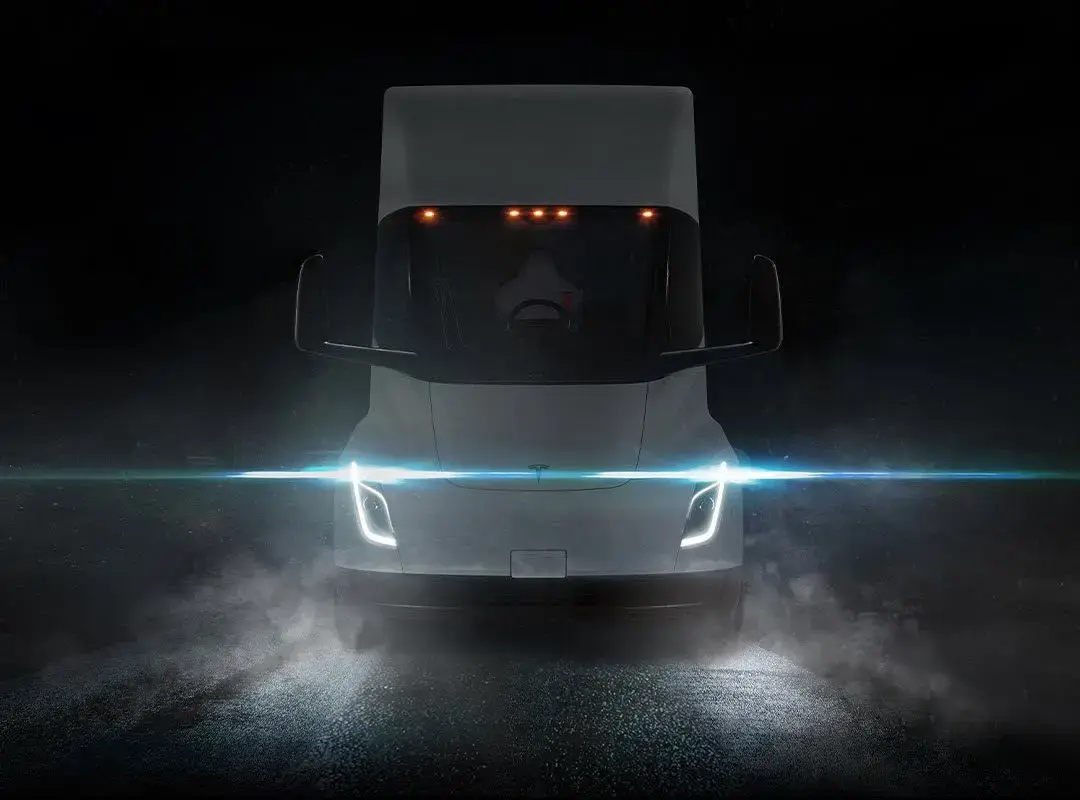
Unfortunately we don’t have a rail freight network that either works well or reaches every township in Australia, and until we do encouraging the switch from ICE road haulage to EV road haulage is the best way to reduce transport industry emissions.
For a lot of the more rural towns (or a least for the ones I know of) that do have rail connections, they are only accessible using diesel locomotives as there is no electricity network set up to power electric trains. So if we don’t want to introduce more emissions from rail freight we would have to electrify the whole rail network.
Realistically we should be building rail and allowing EV trucks to be more accessible, but Australia is a big place, building all that rail infrastructure will take time. A good stepping stone would be to build rail connections to regional urban centres and then have trucks distributing it to the surrounding towns, but even building that much rail will take time. And that’s just the construction. The amount of time it would take to secure the land corridors for the rail would be considerable alone. AEMO have been having a difficult enough time securing land rights to build transmissions networks across properties
This actually seems pretty positive, but I guess also demonstrates how responsible Howard is for helping set in motion Australia’s apathy towards environmental destruction, especially when it gets in the way of fossil fuel operations.
Possibly, but Turnbull did take over as head of https://murdochroyalcommission.org.au/ after K Rudd stepped down to take whatever diplomatic job it was he took.
I think the Murdoch press had a big hand in Turnbull being replaced as PM, because he was actually considering implementing renewable energy policies https://www.theguardian.com/australia-news/2018/sep/19/turnbull-warned-rupert-murdoch-trying-remove-him-prime-minister
That same day the Daily Telegraph had warned of “a toxic brawl” over energy policy. On Sky the night-time commentators Peta Credlin and Andrew Bolt ramped up their negative assessments of the national energy guarantee and of Turnbull himself.
So he is probably butthurt for other reasons too
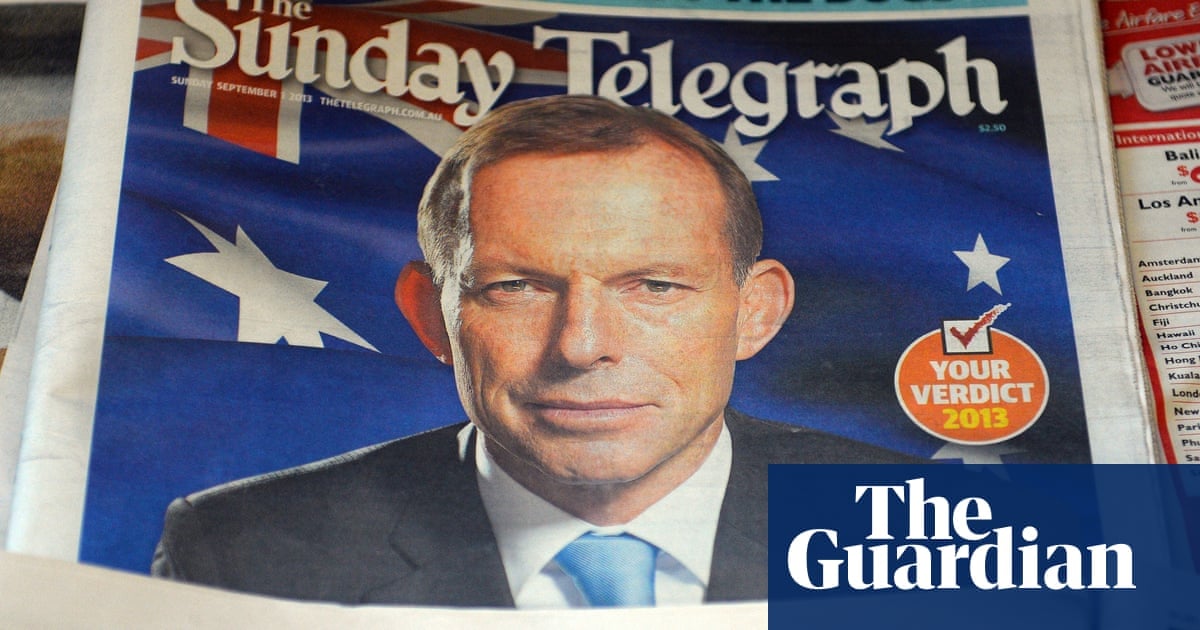
Yeah these quotes from your article really got me
“Self-serving bureaucracies are seeking to silence those who would question their provenance and purpose,” the memo read.
“Elites have open contempt for those who are not members of their rarefied class. Most of the media is in cahoots with those elites, peddling political narratives rather than pursuing the truth.”
Utter madness

I wonder if it has anything to do with this: https://www.businessinsider.com/smartmatic-lawyer-compares-murdoch-mafia-boss-fox-news-defamation-case-2023-9?utm_source=copy-link&utm_medium=referral&utm_content=topbar
 1·2 years ago
Unfortunately 363GWh/60kWh = 6,050,000 cars, which goes to 18,150,000 cars if we only allow 1/3 of the battery charge be used, which is over 90% of the 20 million cars figure you mentioned.
We also havent considered things like big industrial loads, which can have very large energy demands. I think it will be more likely they would require energy storage closer to their location, as drawing power from distributed sources across the entire grid would lead to a lot of grid congestion, as well as higher resistive power losses from transmitting greater distances. Having batteries closer to the large loads would be more similar to how the grid operates now, as the big industrial loads often get their own distribution transformers and lines connected to the transmission system so they don’t negatively impact the distribution lines that provide population centres.
I think it is also worth taking into account the evolution of energy storage tech as well. There are far fewer limitations (size, weight) for land based energy storage types, and there is a lot of research going into more sustainable batteries, but these may not be suitable for EVs for some time. https://cosmosmagazine.com/technology/energy/sodium-ion-batteries/
You are right in the sense that as a significant percentage of the population owns a car, and therefore will forseably own an EV, it would be more sustainable to use that energy storage for the grid, rather than doubling up on energy storage devices.
I’d be interested to know what Australia’s annual energy use would be if the large industrial loads weren’t considered. It may even be that EVs could cover a considerable percentage of residential and commercial energy demand.
Either way, V2G will have an important role to play to completely electrify Australia and the rest of the state governments should pull their fingers out and allow it.
The abuse isn’t the only issue either, it seems like some of the carbon credit organisations aren’t fulfilling their claims either https://youtu.be/Vw3jw5IYL2c?si=R75QkDgFQV_S6o06
Yeah I agree V2G will play apart in complete electrification of the grid, but I think other community or residential energy storage will be necessary too as EVs aren’t guaranteed to be connected to the grid during peak solar generation times. They will be good for supply during peak demand times though, especially as demand peaks when everyone gets home from work, at which time they will be grid connected and can discharge when necessary, with the EV the recharging overnight while energy is cheaper.
The only way I can think of making them a primary storage source is if absolutely every car park in the country has an V2G EV charger installed. That way the online time they would be disconnected I when they were in use. The complication I can see with this though is its hard to predict user habits so if the batteries discharge to the grid too much then the user will be limited to travelling shorter distances. A way around that would be to allow a maximum discharge amount be set I the EV, but this could lead to everyone setting it very high to limited energy is made available to the grid anyway.


It would be interesting to know if returns were taken into account as well. I know these days certain brands will not only delivery the clothes you purchased to you, they will come and collect the clothes you decide you don’t like. These clothes are sometimes repurposed but often just thrown out as well. The below article discussed this. I can remember seeing an article more specific to Aus a while back but this is the best I can find for now.
Edit: spelling and grammar
As other people have said, this seems sus. I work for a PV, inverter and battery manufacturer and that flier has left a lot of things unclear. Like what brand the modules are from? what is the kW rating of the PV array? what is the throughput of the inverter (both ac and dc)? how many batteries? what the kWh storage of each battery?
Even things like: what is the weatherproof (IP) rating on the inverter and battery, this will impact where you install it. What are the warranty periods on the solar modules and battery and inverter.
If you were to even consider going with that you should definitely call and seek clarification on some of the above questions.
If you are generally interested in getting some installed, a good resource to know is Solar Quotes (https://www.solarquotes.com.au/). It is run by an electrical engineer who doesn’t seem to be a representative of any of the manufacturers, so it’s pretty unbiased. He rates all the different manufacturers for each product too.





deleted by creator